Investigational technology. Not FDA-cleared or approved.Research status

BIOELECTRONICS. ARTIFICIAL INTELLIGENCE. HUMAN POSSIBILITY.

A new current
in chronic pain research.

We’re investigating chronic pain with a closed-loop bioelectronic system. AI analyzes EEG feedback to optimize the alternating current (AC) delivered through skin-surface electrodes.

The Biocurrent system is investigational, is not FDA-cleared or approved, and is not available for commercial sale. Safety and effectiveness have not been established.

EEG FEEDBACK. AI-GUIDED CURRENT.FIG. 01
Conceptual illustration
Not patient data
COMPANY-REPORTED STUDY

Puerto Vallarta, Mexico

280study participants
697reported study sessions
Randomized.
Double-blind.
Sham-controlled study

Behind every data point,
there’s a person.

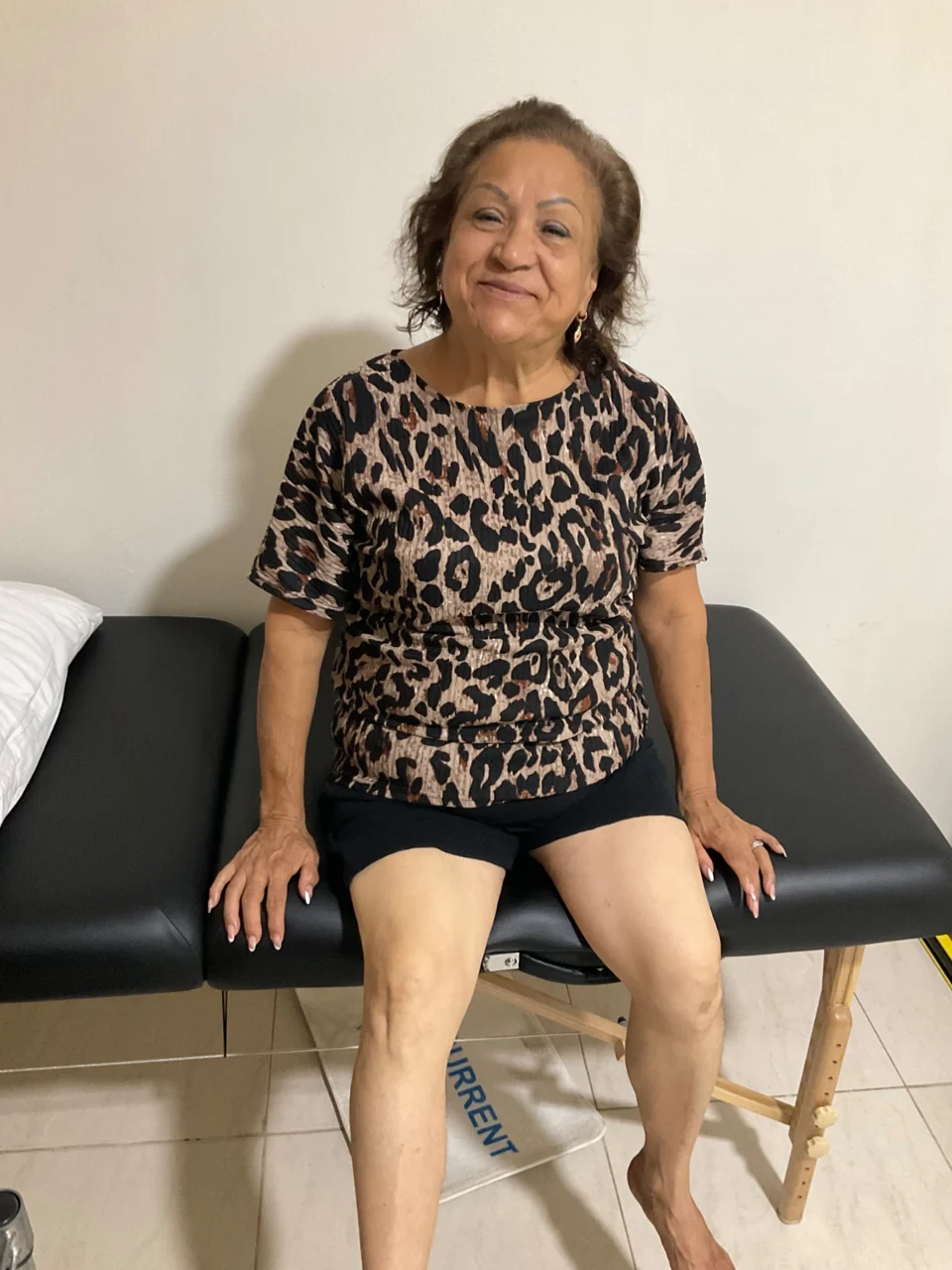
A walk with a friend. A full day at work. A quiet night. Chronic pain can change the shape of ordinary life. That is why better questions, and carefully designed research, matter.

02 / THE SCIENCE

EEG informs the AI.
AI shapes the current.

Biocurrent uses the user’s EEG signal as feedback to adjust electrical stimulation. That ongoing link between measurement and current delivery makes it a closed-loop system.

01

Measure

EEG records the user’s brain activity as an electrical signal. It supplies feedback to the research system during stimulation.

EEG FEEDBACK
02

Adapt

AI analyzes the EEG signal and adjusts the delivered current in response. The aim is to optimize stimulation using that feedback; clinical benefit remains under investigation.

AI-GUIDED CURRENT
03

Deliver

Alternating current (AC) is delivered through electrodes on the skin near the spine or the area of chronic pain. EEG feedback guides further current adjustments, completing the loop.

AC THROUGH SURFACE ELECTRODES

Our research focus is chronic pain. Biocurrent delivers electrical stimulation through electrodes, not a listening therapy. Safety and effectiveness have not been established.

03 / CLINICAL RESEARCH

Curiosity starts it.
Evidence moves it forward.

Our company-reported Phase II study is a starting point for deeper scientific review. We invite the questions that make the next study stronger.

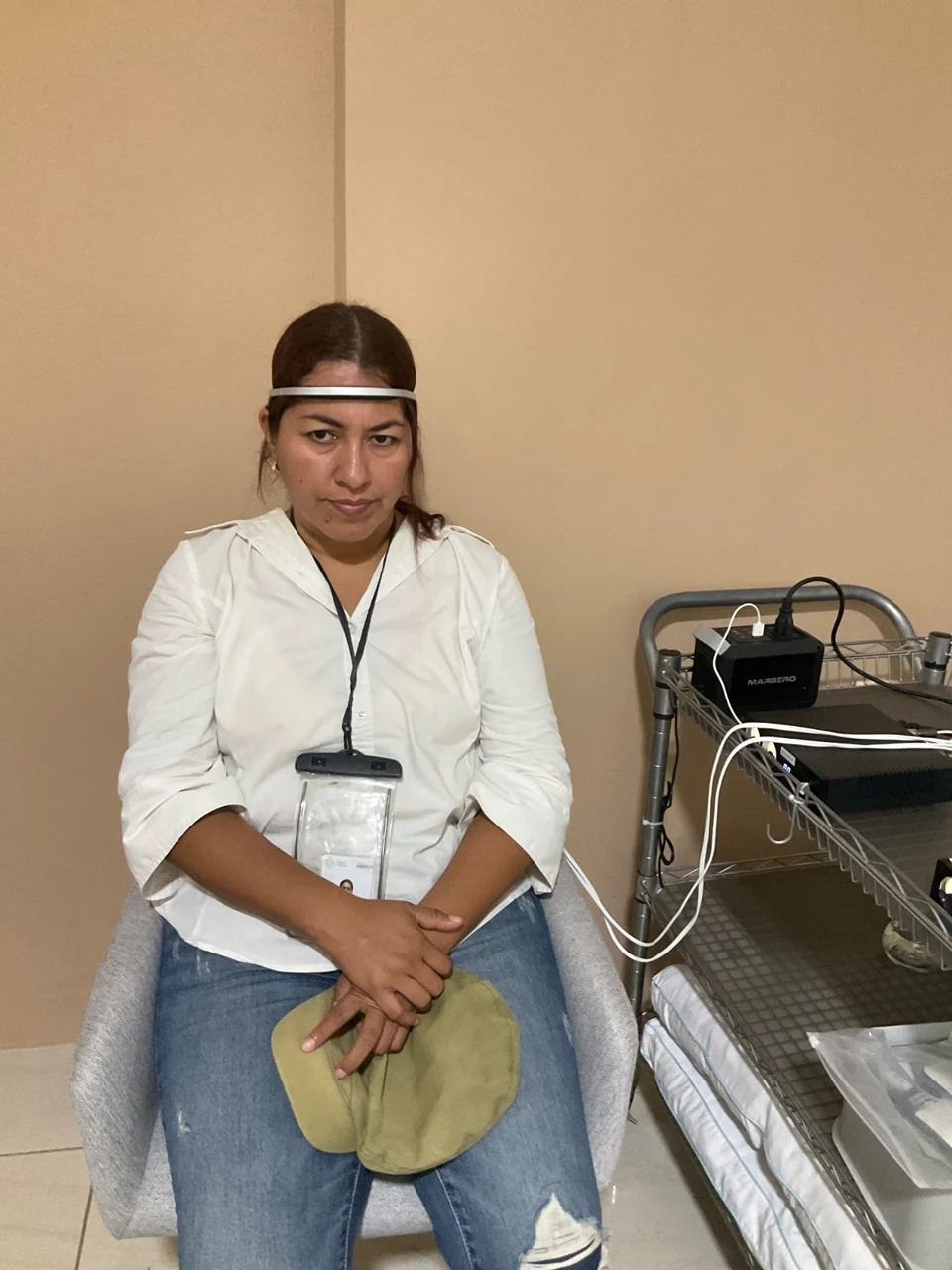
A clinician operates a tablet beside a participant during a Biocurrent research session in Puerto Vallarta, Mexico.
FROM OUR RESEARCH IN PUERTO VALLARTA, MEXICO
COMPANY-REPORTED · PHASE IISTUDY 01

Designed to ask
a meaningful question.

The study compared AI-guided stimulation with a fixed-waveform control using the same hardware, according to Biocurrent’s study summary.

Study design

Design
Randomized, double-blind, sham-controlled
Participants
280 total · 190 active / 90 control
Study visits
1–3 sessions · 30 minutes per session
Setting
Single center · Puerto Vallarta, Mexico
Measure
Self-reported pain, 0–10 numerical rating scale
Examine the reported observations

Research context matters. These are company-reported findings from one short study, not established safety or effectiveness. A public registry identifier and peer-reviewed publication are not linked here. Request the protocol, manuscript, and analysis details for due diligence.

REPORTED OBSERVATIONS

Both groups.
The same scale.

Descriptive figures reproduced from the company’s existing study summary. Active and control results are shown together.

Active · n=190Control · n=90

Mean cumulative pain-score reduction

Active
84.0%
Control
51.7%

Participants reporting ≥50% cumulative reduction

Active
93.2%
Control
57.8%

0–100% scale. “Cumulative” follows the company summary’s terminology across up to three sessions. These figures do not establish long-term benefit or superiority to other treatments.

View the reported outcomes table
Company-reported outcomes · active n=190, control n=90
OutcomeActiveControl
Baseline pain score (0–10)6.286.00
First-session mean reduction68.3%33.5%
Cumulative mean reduction84.0%51.7%
Final mean pain score (0–10)0.993.00
Participants with ≥50% cumulative reduction93.2%57.8%
Participants reporting a final pain score of zero51.1%17.8%
Reported device-related adverse events00

The company summary reports 697 total study sessions and no device-related adverse events during the observation period. This does not establish safety or rule out uncommon, delayed, or unobserved risks. A final pain score of zero does not establish a cure or lasting resolution.

What these observations can and cannot tell us

The reported differences warrant careful review and further investigation. They do not establish effectiveness, durability, or generalizability. The control group also reported substantial changes in pain scores.

This was a single-center study with up to three sessions per participant. Interpretation requires the full protocol, analysis plan, missing-data handling, masking assessment, confidence intervals, adverse-event definitions, and follow-up information. The public summary does not include those underlying materials. Prospective collaborators and investors should review them with the study team.

The study did not compare Biocurrent with medicines, implanted devices, or other marketed treatments. “Phase II” is the company’s study designation and does not indicate FDA authorization or endorsement.

Review the source and request study materials

Source: Biocurrent’s company-provided summary titled Efficacy and Safety of a Closed-Loop, AI-Modulated, EEG-Guided Non-Invasive Bioelectronic Neuromodulation Device for Pain: A Double-Blind, Randomized, Sham-Controlled Phase II Trial (n=280, Puerto Vallarta, Mexico), as reproduced on the prior company website.

The title describes the study’s subject, not an established safety or effectiveness conclusion. This page is a summary, not a publication of the full study. Contact the study team for publication status, registration information, and ethics documentation. This summary does not imply regulatory acceptance.

Request the research materials

04 / FROM SIGNAL TO SYSTEM

Real hardware.
A question still being explored.

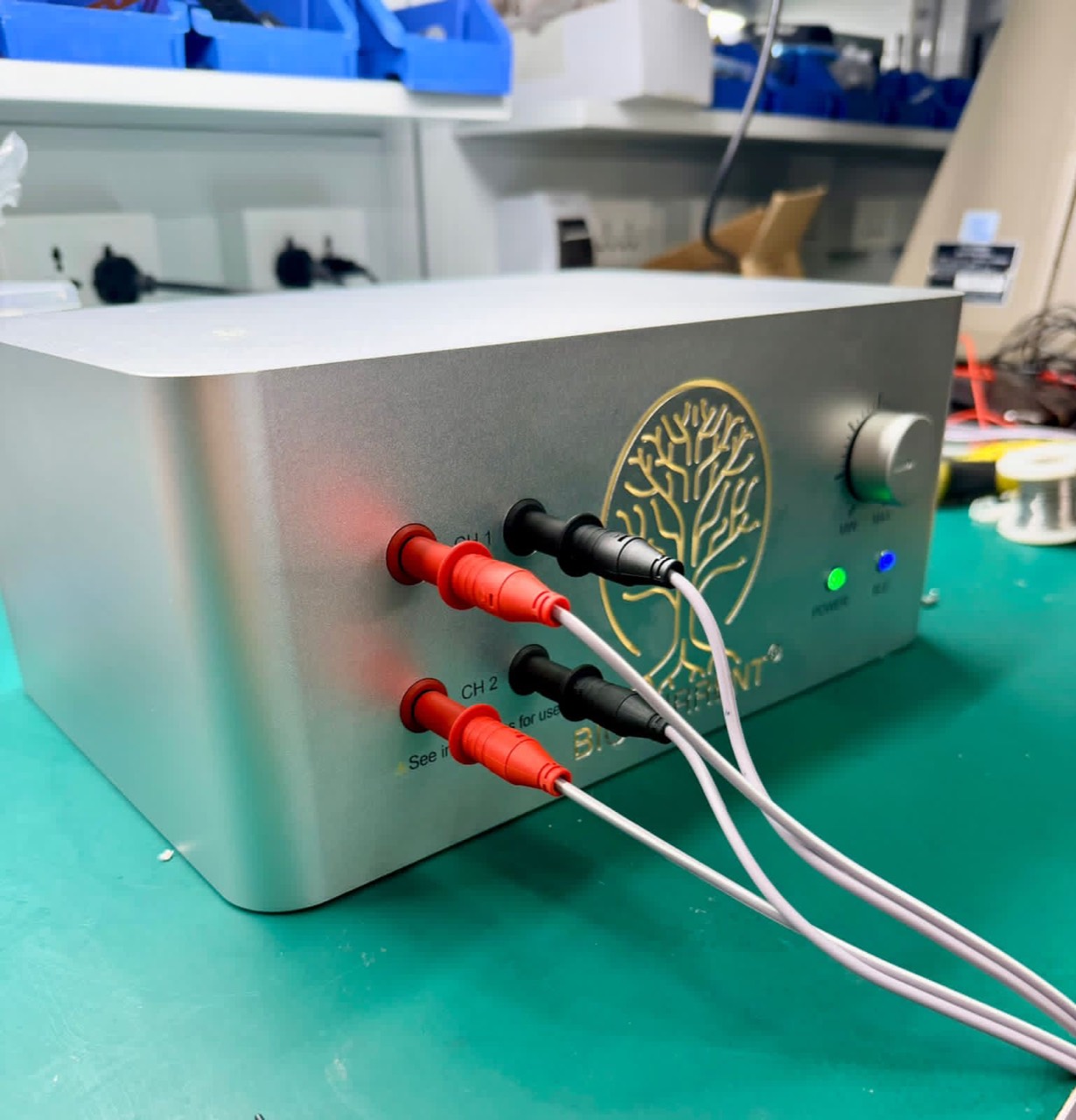
A closer look at the Biocurrent V6. These photographs show our current device in development, with its two labeled channels, front-panel control, and power and BLE indicators.

05 / THE WORK AHEAD

The next chapter
deserves the right people.

Our ambition is to advance the research responsibly. That calls for patient capital, scientific challenge, and experience turning complex technology into carefully evaluated medical devices.

01 / DEEPEN THE EVIDENCE

Ask the next
clinical questions.

Plan further studies to examine reproducibility, durability, and the questions that short-term observations leave open.

02 / DEFINE THE PATH

Build toward
regulatory review.

Develop the evidence, quality systems, and technical documentation needed to support an appropriate regulatory pathway.

03 / STRENGTHEN THE PLATFORM

Bring rigor
to every layer.

Continue hardware, software, and human-factors development with experienced engineering and clinical collaborators.

These are development objectives, not promised milestones. Any future commercialization depends on the required regulatory authorizations, further evidence, financing, and execution. No submission, clearance, approval, or launch date is promised.

06 / OUR PEOPLE

Different disciplines.
A shared sense of purpose.

Experience across software, hardware, clinical operations, and capital markets. A team built to keep asking better questions.

Andrew Blount

Andrew Blount

Founder & CEO

Technology entrepreneur and former RealPage EVP. Founded Biocurrent in 2020, motivated by his own experience with chronic pain.

LinkedIn
QN

Quynh Nguyen

Chief Technology Officer

Leads hardware and software engineering, including collaboration with the company’s development and testing partners in Vietnam.

Dereck Villaseñor Toríz

Dereck Villaseñor Toríz

Clinical Trial Director

Leads the company’s clinical study operations in Puerto Vallarta, Mexico.

Sharon Pollack

Sharon Pollack

VP of Market Development

Brings experience in events and donor development with Barrow Neurological and the St. Joseph’s Hospital Foundation.

Alfred R. Berkeley III

BOARD OF DIRECTORS

Alfred R. Berkeley III

Former President of Nasdaq, bringing experience in capital markets and public-company leadership.

Bring your perspective

OUR ORIGIN

It began with
a personal question.

Andrew’s experience with chronic pain set this work in motion. His background in software and early neural-network experiments shaped the question: could a system learn from the body as it goes?

That personal motivation is the origin of the research. Clinical evidence must stand on its own.

Meet the founder

07 / AN OPEN INVITATION

Good questions welcome.
Great minds, too.

We’re connecting with people who see the value of asking difficult questions, building carefully, and following the evidence.

LET’S BEGIN

What brings you here?

Tell us a little about yourself and the conversation you’d like to have.

Please do not include medical records or personal health information.

By submitting, you ask Biocurrent to respond to your inquiry. SMS is optional. This form is not study enrollment or an offer of securities.

Biocurrent V6 · Actual device photograph · Investigational

FOR THE CURIOUS

YOU FOLLOWED THE QUIETER CURRENT

A little space
just for you.

No scores. No perfect way to do it. Just a few small discoveries.

A moment with no agenda.

Let your breathing stay natural. Rest your attention wherever feels comfortable. You can stop whenever you like.

Thirty seconds, if you feel like it.

Playful activities for general enjoyment and reflection, separate from Biocurrent’s investigational device. Not treatment or medical advice. Skip anything that feels uncomfortable. Nothing you notice or think is collected.